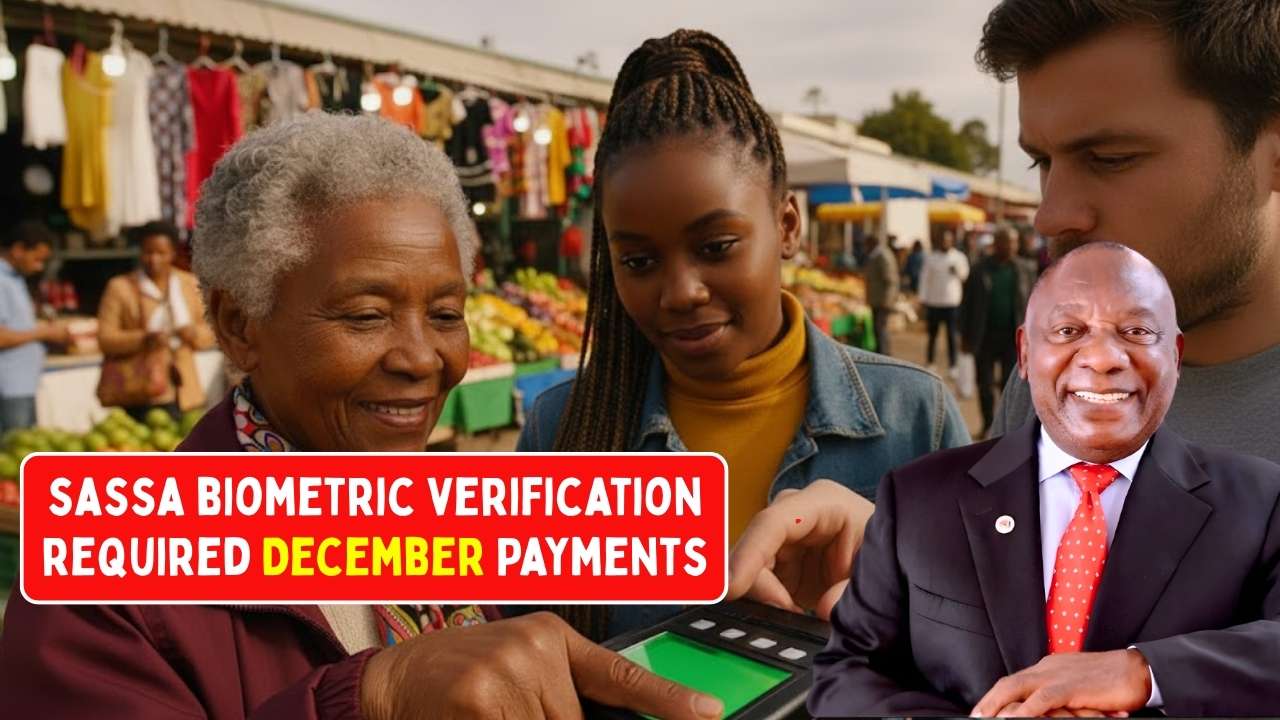
SASSA Grant Update 2025: South Africans who rely on SASSA grants must now adapt to updated regulations that came into force during December 2025. These changes impact how grants are verified, paid, and reclaimed when delays occur. The revised system applies mainly to beneficiaries receiving the R370 Social Relief of Distress grant and the R510 Child Support Grant, but other grants are also affected. Many recipients have reported late or missing payments, which prompted SASSA to introduce faster recovery tools and stricter verification rules.
SASSA Grants Affected by December 2025 Rule Changes
SRD Grant
– Monthly amount: R370
– Key new requirement: Biometric verification and monthly bank detail confirmation
– Payment method: Bank transfer only
– Eligibility group: Unemployed adults aged 18–60
Child Support Grant
– Monthly amount: R510
– Key new requirement: Proof of school attendance and up-to-date vaccinations
– Payment method: Bank account or SASSA card
– Eligibility group: Parents and caregivers of children under 18
Older Persons Grant
– Monthly amount: R2,180
– Key new requirement: Periodic re-verification for beneficiaries aged 75 and above
– Payment method: Bank deposit or authorised pay points
– Eligibility group: Pensioners
Disability Grant
– Monthly amount: R2,180
– Key new requirement: Annual medical reassessment
– Payment method: Bank transfer or SASSA card
– Eligibility group: Approved individuals living with disabilities
Foster Child Grant
– Monthly amount: R1,180
– Key new requirement: Updated court documents submitted twice a year
– Payment method: Bank account or Post Office collection
– Eligibility group: Legal guardians

Care Dependency Grant
– Monthly amount: R2,180
– Key new requirement: Yearly medical review to confirm eligibility
– Payment method: Bank deposit or SASSA card
– Eligibility group: Caregivers of children with disabilities
Grant-in-Aid
– Monthly amount: R510
– Key new requirement: Ongoing dependency documentation
– Payment method: Bank transfer or SASSA card
– Eligibility group: Registered caregivers
From 20 December 2025, SASSA introduced
a stricter compliance framework to reduce fraud and payment errors. While these measures aim to improve efficiency, beneficiaries must now take a more active role in managing their grants. Identity verification has become mandatory for all SRD and Child Support recipients, and banking details must be confirmed through official SASSA platforms.
Payment schedules have also changed. Deposits are now released in phases based on the final digits of a beneficiary’s ID number. This staggered approach helps reduce system overload but has caused confusion for those unaware of the new timelines. Missing a verification request or failing to update personal information can lead to suspended or delayed payments.
Understanding the Difference Between R370 and R510 Grants
The R370 Social Relief of Distress grant is designed for unemployed South Africans who do not receive any other form of income or government assistance. It offers short-term financial support and requires frequent verification to ensure eligibility remains valid.
The R510 Child Support Grant supports families caring for children under the age of 18. Unlike the SRD grant, it focuses on household responsibility rather than employment status. New rules now require caregivers to submit proof of school attendance and vaccination records, ensuring that children benefit directly from the support.
Confusion often arises because both grants target low-income households, yet the qualification criteria and compliance requirements differ significantly. Understanding which grant applies to your situation is essential to avoid payment interruptions.
How to Recover Missing SASSA Payments Quickly
SASSA has launched a simplified recovery process for beneficiaries who did not receive their December 2025 payments. Missing funds may result from incorrect bank details, skipped biometric checks, or system errors.
To reclaim unpaid grants, beneficiaries should visit the official SRD portal, enter their ID number and registered mobile number, select the unpaid month, complete biometric verification if prompted, and confirm banking information. Once submitted, most recovery requests are processed within 7 to 10 working days, provided all details are correct.
Updated December 2025 SASSA Payment Schedule
Payments are now issued according to ID number ranges. Early batches are released first, followed by later groups and reclaimed payments. Beneficiaries are advised not to visit Post Office branches unless they receive direct confirmation that cash collection is available in their area.
New applicants approved before the cutoff date will receive their first payment after verification is complete. Any reclaim requests approved will be paid during the final December disbursement window.
Common Reasons SASSA Payments Are Delayed
Payment delays usually occur due to outdated banking details, missed biometric verification, or incomplete supporting documents. Child Support Grant recipients often face delays when school or vaccination records are missing. Ignoring SMS or email requests from SASSA can also result in temporary suspension.

Other causes include system maintenance, duplicate applications, income reassessments, or fraud alerts. Keeping personal information updated and responding promptly to SASSA notifications helps prevent most issues.
How to Update Your SASSA Details Correctly
Beneficiaries can update their information through the official SASSA website, WhatsApp support line, toll-free call centre, Moya app, or by visiting a local SASSA office. All personal details must match official ID records and bank account information to avoid verification failures.
Regularly checking your status ensures that changes in requirements or payment schedules do not catch you off guard.
What to Do If Your Payment Is Still Missing
If funds have not arrived after completing all recovery steps, beneficiaries can escalate the issue through the SASSA services portal by submitting a dispute for unpaid grants. Supporting documents such as proof of application, bank details, and SMS notifications should be uploaded. Responses are usually provided within five working days.
In unresolved cases, beneficiaries may contact the Department of Social Development or seek assistance from community legal aid organizations.
Final Verdict
The December 2025 SASSA rule changes are designed to create a safer and more reliable grant system, but they require beneficiaries to stay alert and proactive. Whether receiving the R370 SRD grant or the R510 Child Support Grant, keeping personal information updated and following verification instructions is now essential. By understanding the new process and using official channels, beneficiaries can avoid delays and recover missing payments efficiently.
Disclaimer
This article is for informational purposes only and is based on publicly available updates related to SASSA grant administration. Grant rules, payment schedules, and eligibility requirements may change at any time. Beneficiaries should always refer to official SASSA communication channels or contact SASSA directly for the most accurate and up-to-date information.