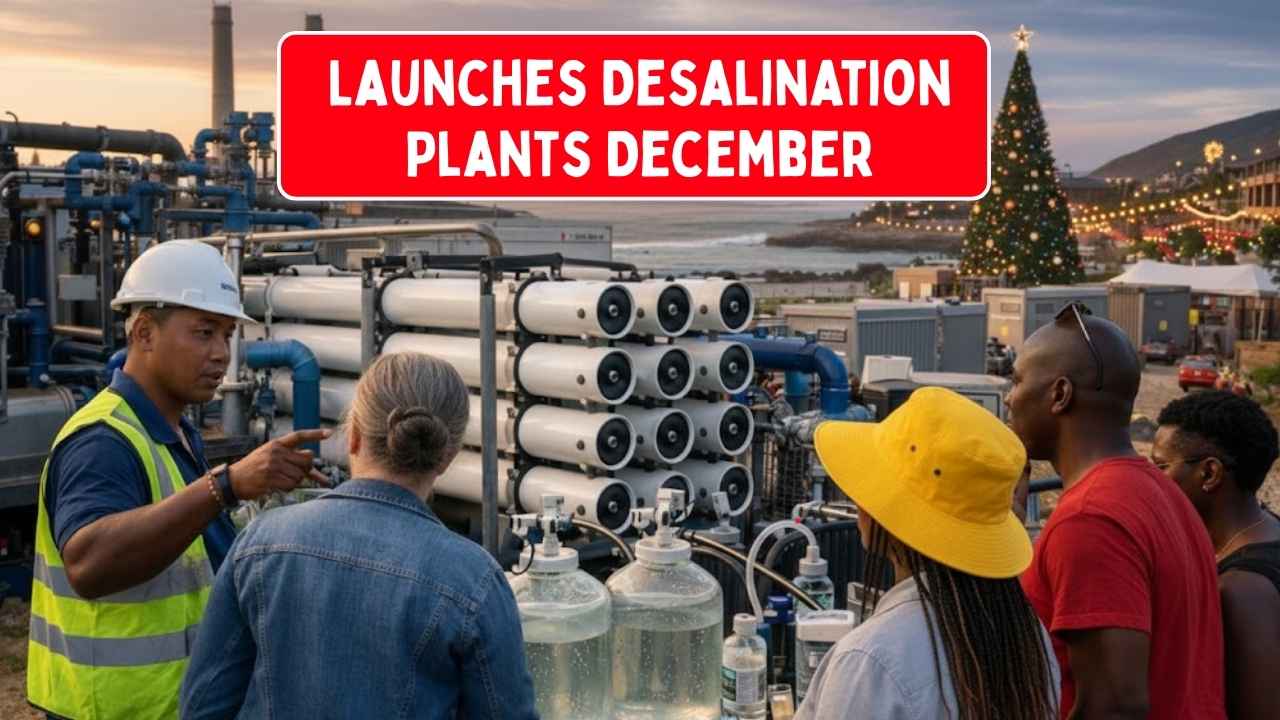
Eskom Pilots Desalination Plants: Eskom is set to roll out its latest desalination pilot plants in Port Elizabeth this December as part of a strategic plan to tackle South Africa’s ongoing water shortages. The country has been experiencing increasing water stress due to climate change and irregular rainfall, making innovative water solutions more essential than ever. The pilot plants are designed to convert seawater into potable water, providing a dependable supply for both urban and rural communities.
Expected Benefits of Eskom’s Desalination Initiative
| Sector | Expected Outcome |
|---|---|
| Water Availability | Consistent and reliable supply for households |
| Agriculture | Improved crop yields through reliable irrigation |
| Industry | Support for factories and local businesses |
| Public Health | Access to safe and clean drinking water |
| Economic Development | Long-term growth through secure water resources |
| Community Well-Being | Better living standards for residents |
| Environment | Reduced pressure on rivers, dams, and groundwater |
| Education & Innovation | Opportunities for research, training, and skill development |
The project focuses on using reverse osmosis technology to remove salt and impurities from seawater, ensuring safe drinking water. This method is especially suitable for coastal regions like Port Elizabeth, where seawater is abundant. Eskom aims to create a model that reduces reliance on rainfall, mitigates the impact of droughts, and ensures communities have continuous access to water.

How the Desalination Pilot Works
The desalination plants use advanced filtration techniques to treat seawater. By employing reverse osmosis, the system separates salts and other impurities, producing water that is safe for consumption and daily use. Eskom’s pilot program will initially supply water to Port Elizabeth residents while also serving as a test model for potential expansion to other water-stressed areas in South Africa.
Community and Economic Impacts
Eskom’s new facilities are expected to benefit local communities significantly. Reliable water access can enhance agricultural productivity, strengthen small businesses, and improve living standards. The project also has the potential to generate local employment opportunities and encourage economic development. Lessons learned from this pilot could help other regions adopt similar water solutions.

Challenges and Opportunities
While Eskom’s desalination project offers a promising solution, there are several challenges to consider. Energy consumption is a major concern, as desalination is energy-intensive and may increase operational costs. Additionally, the disposal of brine, a byproduct of the process, must be carefully managed to avoid environmental harm. These challenges present opportunities for innovation, including more efficient technologies, renewable energy integration, and partnerships with environmental experts.
Long-Term Vision for Water Management in South Africa
The initiative represents a significant step in modernizing water management strategies. Eskom’s approach demonstrates how technology, policy, and community collaboration can work together to ensure sustainable water access. Key focus areas include continued technological innovation, public-private partnerships, policy support, financial investment, community involvement, education, and environmental conservation.

| Key Focus Area | Projected Direction |
|---|---|
| Technology | Adoption of advanced water solutions |
| Partnerships | Stronger collaboration between sectors |
| Policy | Regulations promoting long-term water security |
| Investment | Increased funding for water infrastructure |
| Community | Active local participation in water management |
| Education | Expanded awareness and training programs |
| Conservation | Sustainable water use practices |
| Resilience | Enhanced capacity to cope with climate-related water challenges |
Final Verdict
Eskom’s desalination pilot plants in Port Elizabeth mark a critical step toward securing South Africa’s water future. By combining technological innovation, strategic planning, and community involvement, this initiative provides both immediate relief and long-term solutions for water scarcity. If managed effectively, the project could serve as a model for other coastal cities facing similar challenges.
Disclaimer
This article is for informational purposes only. All data and projections are based on Eskom’s publicly available plans and industry insights at the time of writing. Outcomes may vary depending on project execution, environmental conditions, and policy changes.