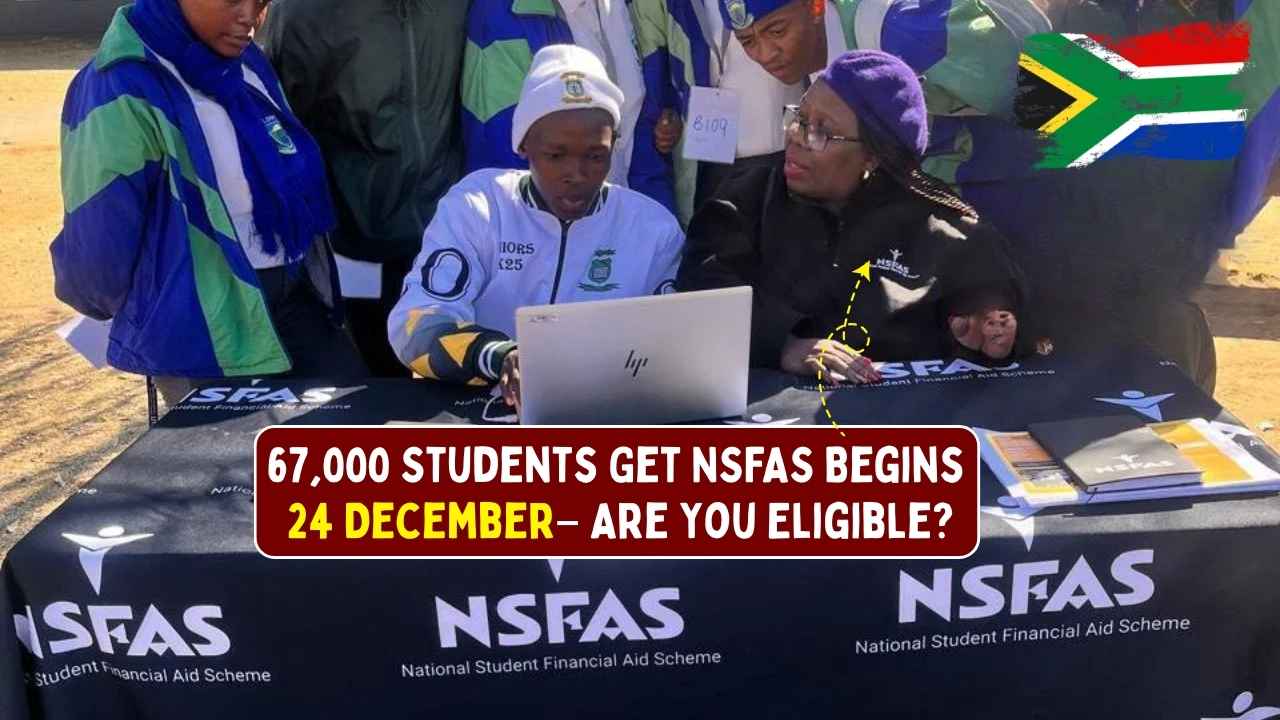
NSFAS Loan: South Africa’s National Student Financial Aid Scheme has confirmed that a large-scale loan forgiveness programme will begin on 24 December 2025, bringing relief to 67,000 qualifying students. This move is expected to ease long-standing financial pressure on graduates who relied on NSFAS funding to complete their studies. As the implementation date approaches, students across universities and TVET colleges are eager to confirm whether their outstanding loans will be cleared.
NSFAS Loan Forgiveness Eligibility Overview
| Requirement Area | Condition to Qualify | Student Action Needed | Cut-off Date |
|---|---|---|---|
| Study Status | Final-year student or studies completed | Upload final academic records | Before 24 December |
| Financial Background | Low-income or disadvantaged household | Submit income verification | Before 24 December |
| Loan Status | No defaulted repayments | Check loan standing on portal | Before 24 December |
| Personal Details | Updated contact and profile info | Review and update profile | Ongoing |
The NSFAS loan forgiveness programme is designed to reduce the burden of educational debt for students who have shown commitment to their studies while facing financial hardship. From 24 December, eligible beneficiaries will see qualifying loan amounts written off, allowing them to focus on employment, further studies, or entrepreneurship without the pressure of repayment obligations. The initiative reflects a broader effort to make higher education more accessible and sustainable for young South Africans.

Who Qualifies for NSFAS Loan Forgiveness
Eligibility for the programme is based on specific criteria set by NSFAS. Students must either have completed their qualifications or be in their final year of study. Priority is given to individuals from economically disadvantaged backgrounds who relied on NSFAS loans for tuition and essential living costs. A consistent academic record is required, and students with outstanding academic fees or defaulted loan accounts may be excluded.
How to Check If Your Loan Will Be Written Off
Students can confirm their eligibility by logging into the official NSFAS portal. Once signed in, beneficiaries should review their loan status, personal details, and academic information. The system will indicate whether the student is included among the 67,000 beneficiaries. Keeping documents accurate and up to date is essential to avoid processing delays or disqualification.

What the Loan Write-Off Means for Students
This loan forgiveness initiative has the potential to significantly improve the futures of thousands of graduates. Removing education-related debt allows young professionals to enter the workforce with greater financial stability. It also reduces stress, improves long-term career planning, and enables graduates to invest in skills development and personal growth. By easing post-study financial pressure, the programme supports broader economic participation.
Application and Verification Process Explained
Students do not need to submit a new application if their details are already up to date, but verification is crucial. Beneficiaries should ensure that academic transcripts, income documentation, and contact details are correctly uploaded on the NSFAS system. Any requests for additional information from NSFAS should be addressed promptly to ensure inclusion before the rollout date.

Benefits Beyond Debt Relief
The impact of NSFAS loan forgiveness extends beyond individual students. By lowering graduate debt levels, the programme encourages higher enrolment in tertiary education and contributes to a more skilled workforce. Graduates are better positioned to seek employment, start businesses, and contribute positively to their communities without the long-term strain of student debt.
Final Verdict
The NSFAS loan forgiveness programme starting on 24 December 2025 marks a meaningful shift in student funding support. For 67,000 students, it offers a fresh start free from education-related debt, while reinforcing the importance of accessible higher education in South Africa. Ensuring accurate records and timely verification will be key for students hoping to benefit from this initiative.

Disclaimer
This article is intended for informational purposes only and is based on publicly available NSFAS announcements and guidelines. Eligibility criteria and processes may change. Students should always consult official NSFAS platforms or their institution’s financial aid office for the most accurate and up-to-date information.