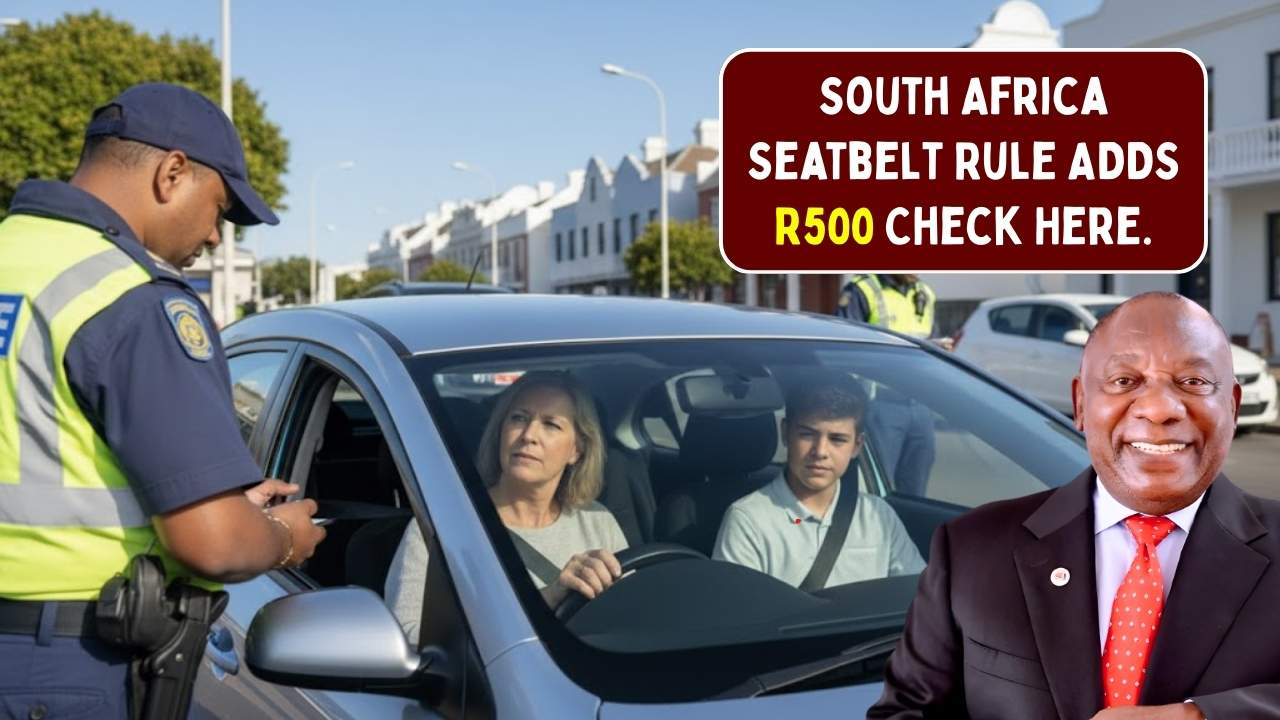
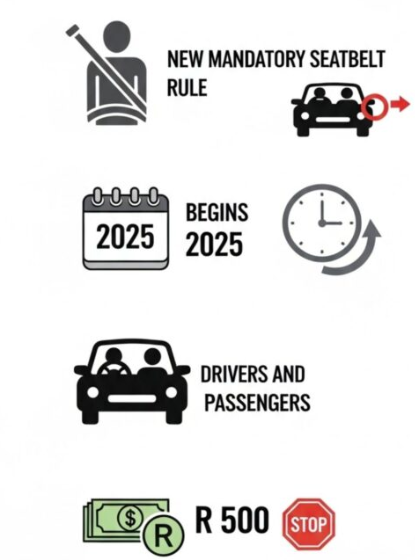
Mandatory Seatbelt Law: South Africa is set to roll out stricter road safety regulations starting in December 2025, focusing strongly on seatbelt compliance. Under the new rules, every person inside a moving vehicle will be legally required to wear a seatbelt, and failure to do so will result in a R500 fine. The policy is part of a nationwide strategy to reduce injuries and fatalities caused by road accidents and to encourage safer travel habits across the country.
Updated Seatbelt Penalty Rules in South Africa (2025)
| Rule Category | Details |
|---|---|
| Fine Amount | R500 for each person not wearing a seatbelt |
| Implementation Date | December 2025 |
| Who Must Follow | Drivers and all passengers, front and rear |
| Vehicle Coverage | Private cars, taxis, minibuses, buses, transport vans |
| Enforcement Method | Roadblocks, traffic stops, routine inspections |
| Repeat Offences | Higher fines and possible legal action |
The new seatbelt enforcement framework will apply to both private and public transport. Authorities have confirmed that passengers, not only drivers, will be held directly accountable if they ignore seatbelt requirements. This marks a major shift from earlier enforcement practices, which often focused mainly on drivers.
What the New Seatbelt Regulation Means for Road Users
From December 2025 onward, seatbelt use will be mandatory for everyone in a vehicle, regardless of where they are seated. This includes passengers in taxis, minibuses, buses, and other public transport vehicles. Traffic officers will carry out regular inspections, and any passenger found without a fastened seatbelt can expect an on-the-spot R500 penalty.

The rule removes ambiguity by making personal responsibility clear. Each individual must ensure their own seatbelt is properly worn before and during a trip.
Why South Africa Is Introducing a R500 Seatbelt Fine
Road safety statistics have shown that a significant number of serious injuries and deaths occur because occupants are not restrained during crashes. Studies consistently demonstrate that seatbelts reduce the severity of injuries and save lives. By standardizing the fine at R500, authorities aim to send a strong message that ignoring seatbelt laws is a serious offence, not a minor oversight.
The government believes that stricter enforcement and clearer penalties will lead to better compliance and safer roads, especially during peak travel periods.

Who Will Be Affected by the New Seatbelt Law
The updated law affects all road users. Drivers must wear seatbelts, and so must passengers sitting in both the front and back seats. Public transport users, including those in taxis, minibuses, and buses, are also covered under the regulation.
Parents and guardians traveling with children are required to use approved child restraints that comply with existing child safety regulations. Responsibility for safety extends to every journey, no matter how short.
Penalties and Consequences for Repeat Offenders
Motorists or passengers who repeatedly violate the seatbelt rule may face escalating consequences. These can include higher fines and additional legal measures. Failure to pay the R500 fine within the specified timeframe may result in extra charges being added to the original amount.

Traffic authorities have emphasized that the goal is not punishment alone, but long-term behavior change that leads to fewer road accidents and safer travel conditions.
Final Verdict
The new South Africa seatbelt rule coming into effect in December 2025 represents a firm move toward improved road safety. By applying a R500 fine to any unrestrained passenger or driver, the regulation places responsibility on every individual in a vehicle. Consistent enforcement and public cooperation will be key to reducing injuries and saving lives on South African roads.
Disclaimer
This article is for informational purposes only and is based on publicly available details regarding South Africa’s proposed seatbelt regulations. Traffic laws and penalties may change or be updated by authorities. Road users are advised to consult official government or traffic department sources for the most accurate and up-to-date information.